
Dual Wills
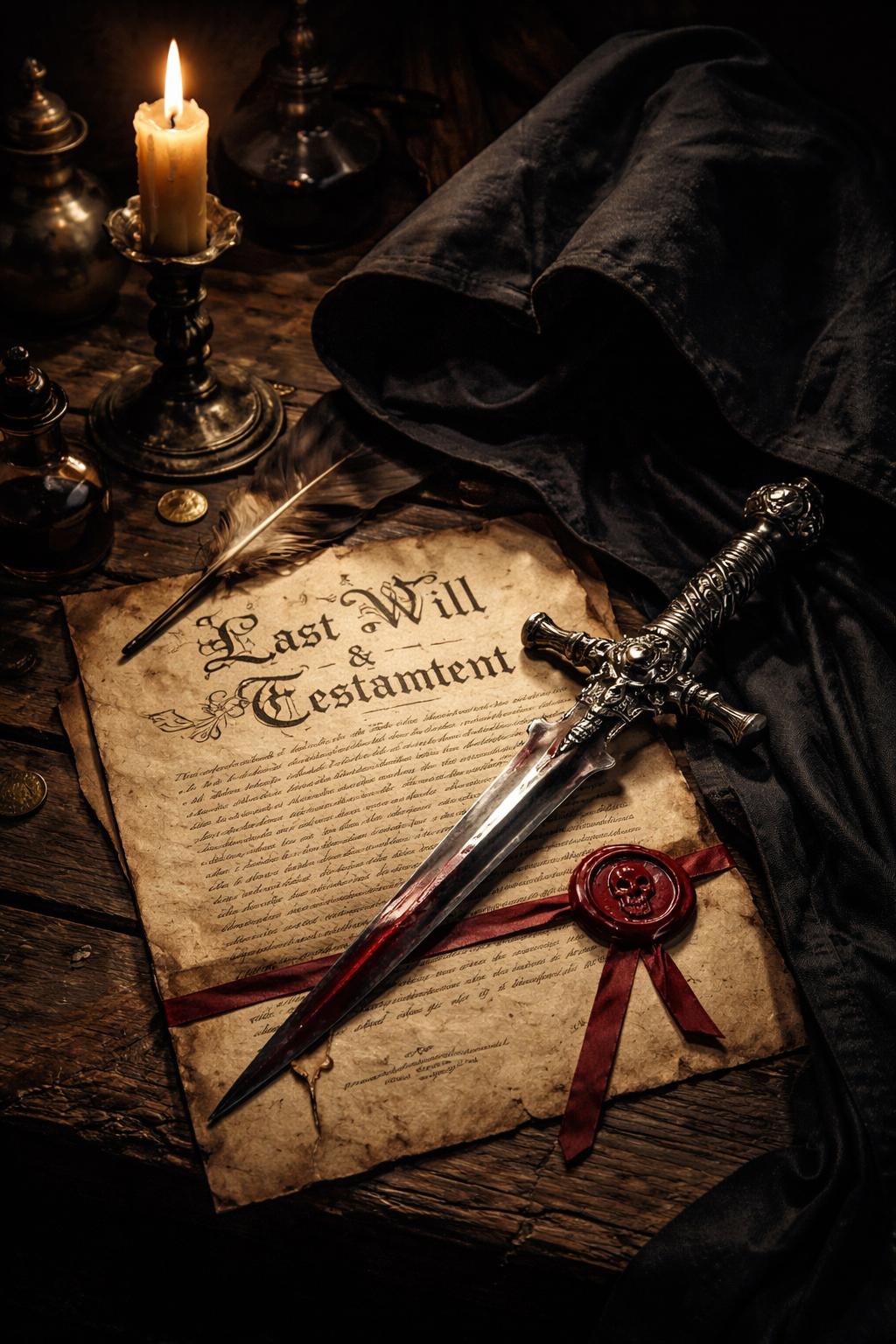
- Explaining the estate planning tool of dual wills, which allows for probate fees to be paid only on those assets that require probate
It’s cloak and dagger time.
Last week, while revisiting a series I wrote about avoiding probate, I mentioned another tactic: holding wealth in assets that don’t require probate – like gold bars.
I gave a caution.
If you mess up by owning even one asset that requires probate:
- The legal expense and time delay of the probate process will be required, and
- Those gold bars will have to be disclosed in the probate application, with the consequence that probate fees will include a percentage of their value.
I gave a teaser that I might write about the “cloak and dagger estate planning tactic of having two wills”. It’s a tactic commonly referred to as “dual wills”.
It’s a perfectly legal tactic.
But its use in British Columbia has only recently (2017) been endorsed by our courts.
You have one will, the “Official Will”, for those assets that require probate, i.e. your house, car, bank and investment accounts, boat, etc.
And a separate will, the “Secret Will”, for everything else, i.e. your gold bars, cryptocurrency, jewellery, tools, etc.
It is critical that you name a different executor for each of your wills.
I’ll explain why.
In short, the executor of the probated will only has to swear to the assets they are responsible for.
The executor of the Official Will has to swear a document as part of the probate application process, called an “Affidavit of Assets and Liabilities for Domiciled Estate Grant”.
That Affidavit includes this statement (I’ve removed words to make it more understandable): “Attached to this affidavit as Exhibit A is a Statement of Assets…that discloses the … property … that passes to the applicant in the applicant’s capacity as the deceased’s personal representative”.
The property passing to the executor of the Official Will includes only the property referred to in that will. It does not include the property passing to the different executor of the Secret Will.
Probate fees are assessed based on the property disclosed in that affidavit. No probate fees are assessed on the property covered by the Secret Will.
Why doesn’t everyone use dual wills to avoid probate fees?
I’ll answer that question with a question: How much property do you own that wouldn’t require probate?
For most people, it’s such things as household furnishings, jewelry, tools, lawn mower, computer, cell phone, hunting rifles, etc. The replacement cost of all that stuff might be significant, but probate fees are based on “as is” market value. Add up the used Facebook Marketplace values of all of that and you might, on a really, really good day, reach $50,000.00.
Probate fees on $50,000.00 are only approximately $700.00.
A million bucks in gold bars, attracting probate fees of approximately $14,000.00, might warrant the hassle of having two executors and the added legal expense of this estate planning tool.
More commonly, dual wills work well for those with significant wealth in a holding company, professional company, or other closely held private corporation.
Another use for dual wills is where there are assets outside of Canada.
I used the label “Secret Will” in part to go with the cloak and dagger theme, but also because some people prefer to keep their wealth confidential. Probate files are publicly available for a small fee, so anyone can find out the value of a person’s probated estate. The assets of the Secret Will, on the other hand, are kept private and confidential.
I’ll end with a caution.
This is complicated stuff. Do not attempt to set this kind of thing up by yourself. A lawyer’s involvement is critical. This caution is not self-serving. I am not taking on new estate planning clients at this time – preferring to focus on the estate administration (probate) side of my practice. E-mail me for a referral to lawyers who do offer this estate planning tool.