
Letters to your loved ones
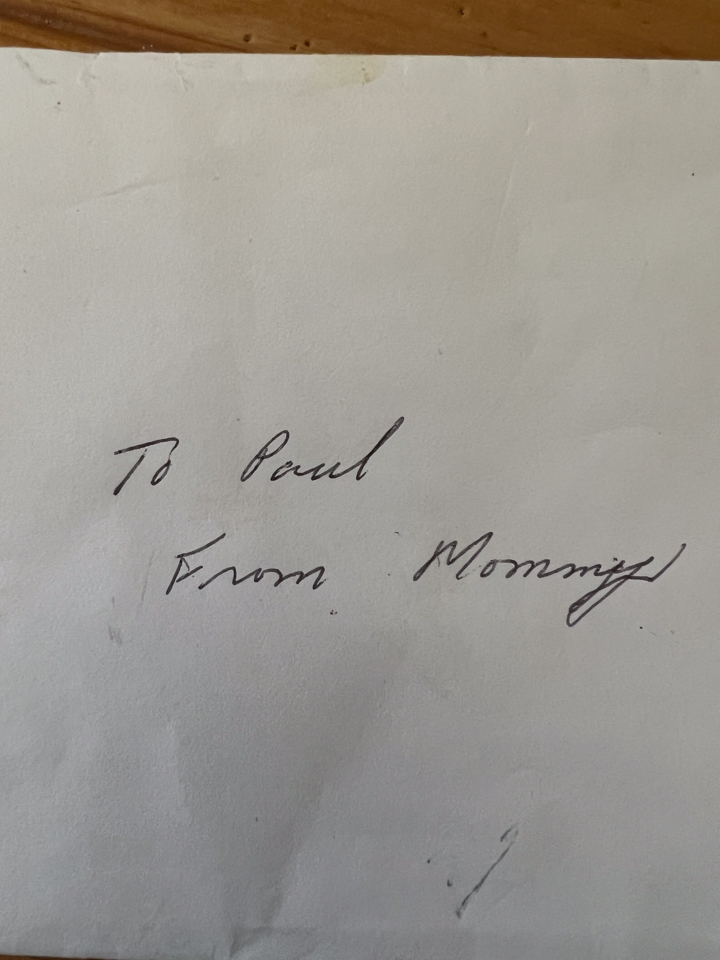
- Suggesting that we write letters to our loved ones as part of our estate planning
“Precious Paul: I love your appreciation! I love that you love me so dearly! I am the one who is blessed!! O.K. – so are you…”, are the first couple lines of a handwritten letter that means the world to me.
My mother died of cancer on April 17th, 2017, at the age of 76.
In preparation for her death, she hand-wrote letters to those closest to her and sealed them in envelopes with our names on them.
On my envelope, she wrote: “To Paul, From Mommy”.
This has significance because my brother and I had been raised to call our parents by their first names. I remember thinking how sensible that was when at a school event and other kids were calling out “Mom!” or “Dad!” within a sea of moms and dads.
It wasn’t until I had my own children that I recognized the depth of feeling contained within the label of “Mom” and “Dad”.
That “From Mommy” tore open my tear ducts before I unsealed the envelope. But simply holding this last and most precious gift from my mother would have been enough.
I cherish that one-page letter.
Not because she wrote anything particularly special. It didn’t require special or eloquent wording or clever drafting.
She couldn’t have gotten it wrong. It could have been any words strung together that included a positive message of goodbye.
The binder I referred to in my last column, containing information and documentation as a gift to your executor, includes a tab for letters or notes for your executor to pass on to your loved ones.
Some of us, like my mother, will receive a terminal medical diagnosis which will put the proximity of our death into focus.
If you find yourself in that situation, I hope that reading about how much I cherish my letter might motivate you to follow my mother’s lead and handwrite letters to those closest to you.
Death is coming for the rest of us as well, coming closer and closer.
We do the responsible thing of getting our legal affairs in order with an estate plan in case death comes unexpectedly.
How about including goodbye letters to our loved ones as part of our estate planning.
If writing the letters in our 50s or 60s and death doesn’t come until decades later, we can write updated ones just like we might update our wills.
Unlike updated wills that revoke the previous ones, an updated letter can supplement and be added to a previous one.
I suspect that sitting down, pen in hand, might have added benefits.
Expressing positive feelings about a loved one on paper might lead to a realization that there’s been a lack of such expression over the years.
And lead to being more intentional about expressing our feelings for each other while we’re still alive.
Regardless, I cannot emphasize enough how thankful I am that my mother took the time to share some words with me. The fact that they are in her handwriting is extra special.
I haven’t taken this step myself. But putting my mind to it by writing this column has motivated me to do so.


