Getting rid of a squatter – Part 2
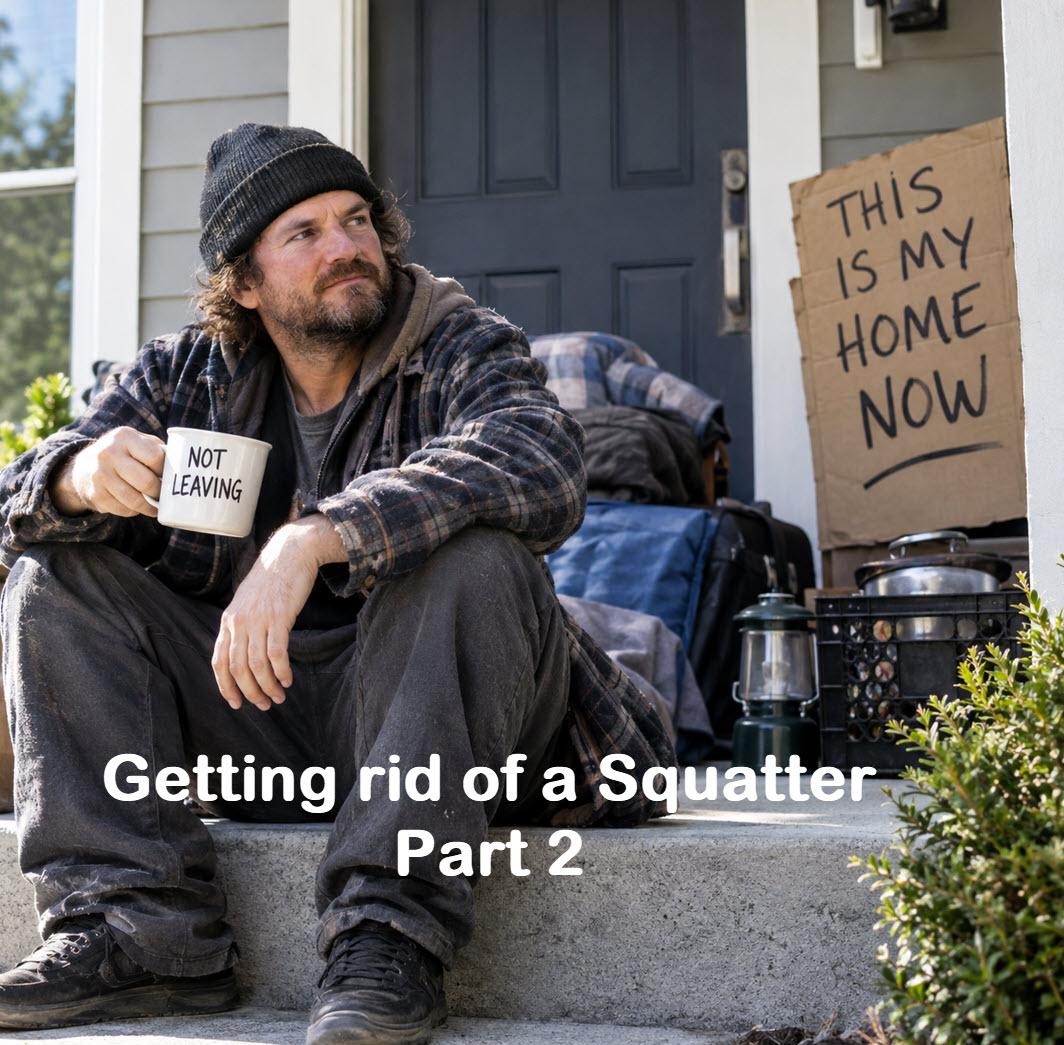
- Describing an actual legal case where a sibling squatter continues living on the estate property for another 5 years before being forced to leave by a sibling administrator’s lawsuit. Identifying the delay to beneficiaries in getting their inheritance and potentially significant cost to the estate for the delay in forcing the squatter out. And explaining the consequences that might be faced by the squatter.
This is part two of a short series about an executor’s remedies against a “squatter” the deceased homeowner had allowed to live in their home.
Thank you to Gail who posed the question.
The most common scenario is a parent allowing an adult child live with them. The child might need the support of free accommodations. Or might be providing important help and support to their parent.
It might also be a friend.
I made it personal last week, describing my two youngest as squatters because we are allowing them to live with us while they attend university.
I explained that if my wife and I were to die, the authority over who lives in our home would pass to our executor.
I explained that unless there was a tenancy agreement (which would rarely be the case), the executor would have to take proper steps to end the squatters’ “license to occupy”.
To do so, the executor would need to give clear notice that they must leave and also give them a reasonable time to do so. If the squatter doesn’t leave, a court application would be required.
This is what the personal representative in the legal decision of Heaton Estate v. Heaton, 2025 BCSC 1248, had to do.
The deceased, Shirley Heaton, had 7 children.
Shirley died without a will. Her daughter, Suzanne, was appointed as the personal representative of the estate.
The only estate property was a 67-acre farm.
Each of Shirley’s 7 children were entitled to an equal share of the estate.
Shirley’s son, Roger, had lived on the farm for decades before Shirley’s death on May 20th, 2020, and he had continued living on the property right up to the trial that occurred in April, 2025, even though Suzanne had asked him to leave on multiple occasions.
Suzanne asked the court to order Roger to vacate the farm. She also asked the court to order Roger to pay something called an “occupational rent” for the time he had lived on the property rent free.
The court granted the order that Roger vacate the farm but gave him 45 days to do so. The claim for occupational rent was adjourned to be dealt with at another time.
Roger might be a poster child for other squatters. Goodness, he remained on his mother’s property a full 5 years after his mother’s death, even though the executor (his sister) had asked him on numerous occasions to leave!
Roger’s refusal to vacate the property interfered with two different opportunities for a sale of the property.
The court decision doesn’t explain the executor’s delay in taking legal action. I suspect they hoped that Roger would eventually agree to leave.
Not only are the beneficiaries having to wait years for their inheritance, but the delay could mean a huge cost to the estate. There might be a downturn in the market and one of those missed sales could have been at a much higher price than the farm ends up selling for.
Consequences to a squatter like Roger for their conduct can come in two forms.
One is having to pay something called “costs”. Roger was ordered to pay some money to compensate the estate for the expense of having to bring the lawsuit. This would be deducted from his inheritance.
Another is this thing called “occupational rent”. The court might assess a retroactively applied rent as compensation to the estate for the time he continued living on the farm after being asked to leave.
Occupational rent is not automatically assessed. There are many factors the court will consider when deciding whether it would be fair to assess it. If assessed, though, it can be very significant. This amount would also be deducted from Roger’s inheritance.
Next week I am going to address the puzzle of what happens if the squatter is also the executor. Roger was finally forced off the property because the executor took legal steps to make that happen. If Roger is also the executor, Roger’s interests as a free-loading squatter directly conflict with the best interests of the estate which he is supposed to look after.