Getting rid of a squatter – Part 1
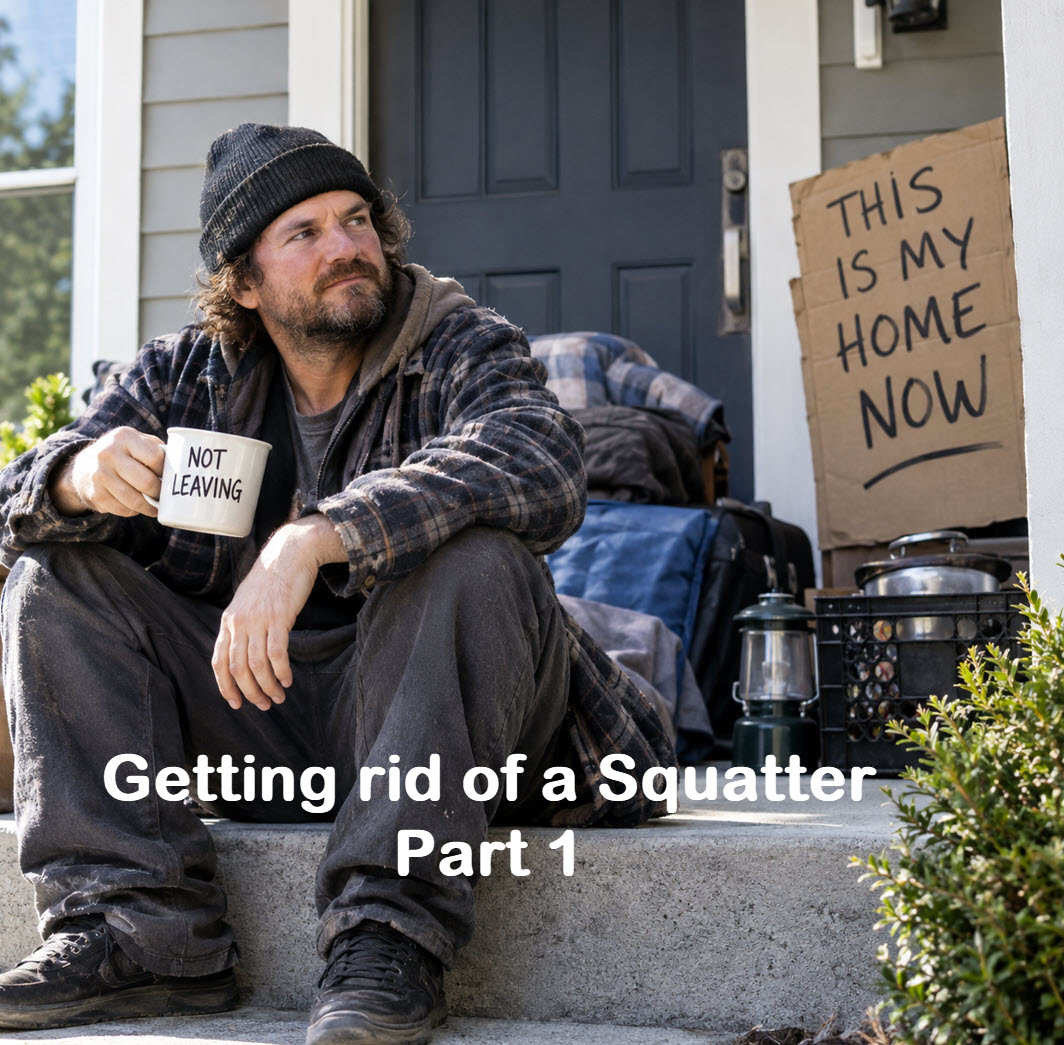
- Addresses a reader question about how an executor evicts a “squatter” – i.e. someone the deceased homeowner had allowed to live in their home rent-free. Provides factors to help determine if it’s in the estate’s best interests to evict the squatter and explains that if eviction is the way to go, the Residential Tenancy Branch is not an option and the only way to proceed is by accessing the court.
“I’ve been curious about what rights a child, parent or friend might have who has been “squatting” in a residence prior to and after the death of the homeowner.”
Gail continued: “Of course, that’s assuming provisions for the “squatter” weren’t made in a will or trust agreement.”
Thank you for the question.
My wife and I have two “squatters” in our home, so I can give you a scenario that’s personal to me.
Our two youngest are living with us while attending UBC Okanagan.
They don’t pay rent.
They don’t contribute to food or other household expenses.
More leaches than squatters?
I’m not complaining. We wouldn’t have it any other way. They’re a pleasure to have around and in no time, we’ll have to face the reality of getting to see them only on weekends or special occasions.
Our other two live elsewhere and pay their own way. They might feel it’s unfair that their younger siblings get free room and board. But that’s our choice. We can do as we please with our home and income.
That would change if we both died.
The house would suddenly become an estate asset.
Unless we include provisions in our wills for the squatters to continue living in the home (we have not), the generosity we showed won’t automatically extend past our deaths.
The house would fall under the authority of our executor.
An executor must act in the best interests of the estate.
Our estate’s best interests might not be served by allowing the squatters to continue living in the house rent free from the time of our deaths until the eventual sale of the home.
Here are some factors that could weigh into that determination:
- Will the squatters provide basic yard maintenance and snow removal services which would otherwise have to be paid for by the estate?
- In the opinion of a realtor, would the house sell quicker and for a higher price if it is vacant or if it is occupied?
- Will the squatters keep the home clean and ready for real estate showings? Will they be super-flexible with a realtor accessing and showing the home?
- How expensive would it be to make alternate arrangements for the care of our two dogs?
- Could a paying tenant be secured for the uncertain amount of time it would take to market and sell the property? If so, would the tenant’s rights reduce the flexibility of the terms of a sale?
For the purpose of answering Gail’s question, I will assume that the best interests of the estate would be served by evicting the squatters, but that the squatters don’t want to leave.
There’s no such thing as “squatters rights” in British Columbia where a rent-free occupant gains a right to continue living on the property rent-free.
But an executor cannot simply break into the home, throw out the squatter and change the locks.
Doing so would risk criminal charges as well as civil liability.
I see from publicly available decisions of the Residential Tenancy Branch (RTB) that some executors have tried to use residential tenancy laws to try to remove squatters.
An attractive option because a lawyer isn’t required and the RTB can make enforceable eviction orders.
Unfortunately for executors, though, the RTB will act only if there’s a tenancy agreement.
There’s a RTB Policy Guideline that helps with distinguishing between a tenancy agreement (when the RTB will act) from a license to occupy (when the RTB will not act).
Some factors weighing against a tenancy agreement:
- No security deposit,
- The homeowner retains access to or control over portions of the residence,
- No fixed rent payment amount, and
- A family or other personal relationship with occupancy given because of generosity.
So much for that option!
The proper way to end a “license to occupy” (a legal label for the permission a squatter had to live on a deceased’s property), is for the executor to give clear, reasonable notice requiring them to leave.
If the squatter ignores the notice, the executor is likely left with applying to the Supreme Court of British Columbia for an order requiring the squatter to vacate the residence.
The squatter is not without consequences. Next week, I plan to discuss financial consequences a squatter who refuses to obey an executor’s notice to vacate might face.