
Getting rid of a squatter – Part 3
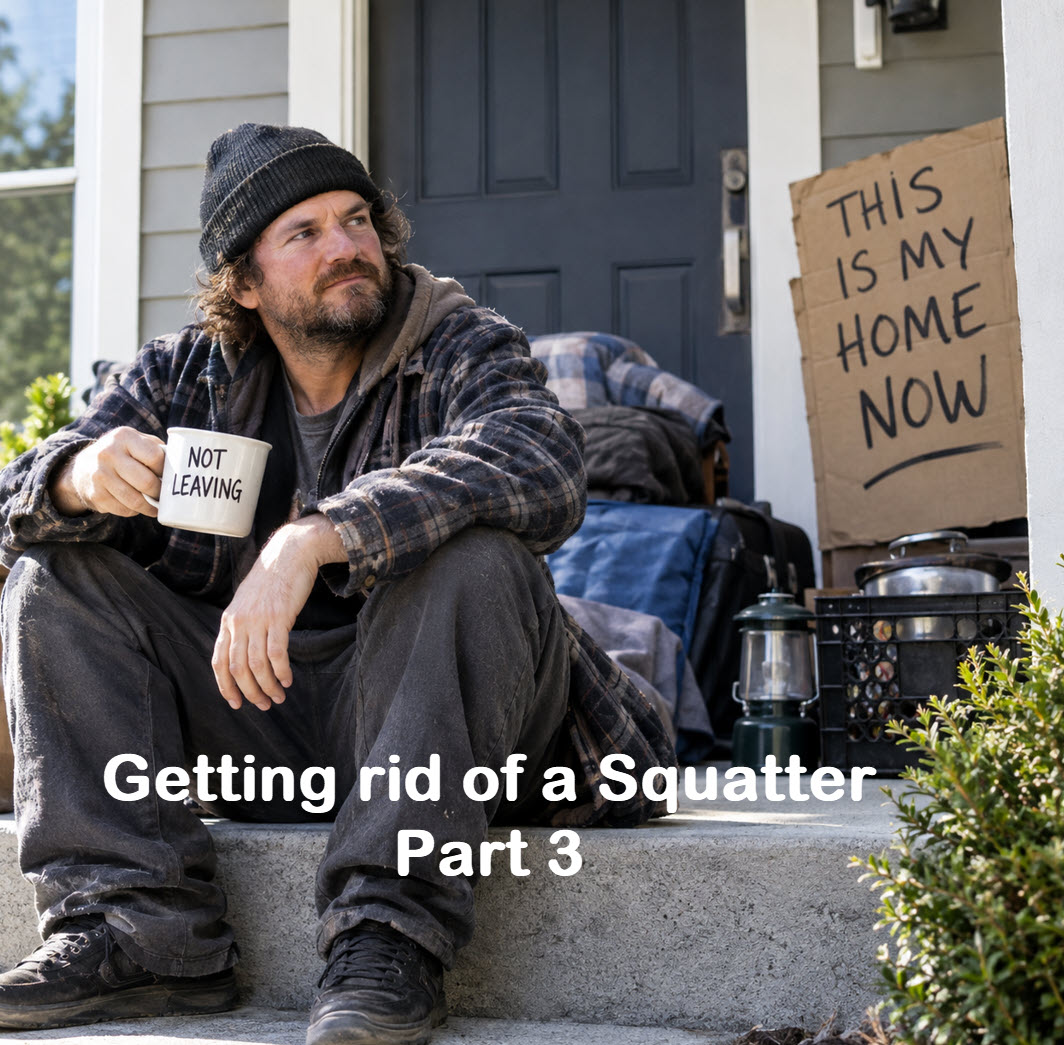
- Describing a more complicated situation where the squatter is a co-executor of the estate. Describing an actual legal case where a co-executor moves into an estate property and lives there for years before a beneficiary gets the court to remove the co-executors and have them replaced. After the previous co-executor is removed, she is required to pay an “occupational rent”.
This is the 3rd of a series about the rights of a “squatter” living on a deceased homeowner’s property.
Last week I shared a legal decision where an estate administrator named Suzanne asked the court to force her brother Roger to leave their deceased mother’s 67-acre farm.
Suzanne had asked Roger numerous times to leave. Roger’s refusal had resulted in two missed opportunities to sell the farm.
By the time of the hearing, Roger had continued living on the farm for a full 5 years after their mother’s death.
The court gave the requested order. Finally, Suzanne would be able to sell the farm.
In that case the estate representative and the squatter were two different people.
This week I discuss the more complicated situation where they are one and the same.
This would seem to be a more likely scenario.
There must be a level of trust and affection between a homeowner and the person they’ve allowed to live on their property. The squatter would be their natural choice of executor.
A poor choice, though, from a conflict-of-interest perspective.
A squatter’s interest in continuing to live rent free would likely conflict with their executor duty to look after the best interests of the estate.
This was the subject matter of Thomas v. Leslie, 2025 BCSC 436.
Virginia Thomas died in 2010 at the age of 75.
Ms. Thomas had a will naming her three children – Nicole, Kimberly and Barry – as beneficiaries. She named Nicole and Kimberly as co-executors.
One of the estate assets was a house in Dawson Creek.
Nicole offered to purchase the house from the estate and a purchase price was agreed upon.
It was also agreed that Nicole would not move into the house until she paid for it.
But Nicole did move in, in breach of the agreement.
Co-executor Kimberly insisted that she complete the purchase of the property in a timely way. But did nothing to enforce that insistence.
Approximately nine years passed before son Barry finally brought a successful court application to remove his sisters as co-executors and to appoint his children, Adam and Jessica, in their place as the new estate administrators.
They gave Nicole a notice to vacate which she obeyed. The property, which Nicole had allowed to fall into disrepair, could finally be readied for sale and sold so that the beneficiaries could receive their inheritances.
Adam and Jessica asked the court to require Nicole to pay an “occupational rent” for nine years of her occupation of the home.
They provided evidence that a very reasonable monthly rent would have been $1,200.00.
The court agreed, ordering Nicole to pay the nine years of “occupational rent” totaling $129,600.00 minus any expenses that Nicole had paid to maintain the property that a renter would not have had to pay.
These cases I’ve referred to offer some important lessons:
- If it’s in the best interests of the estate that an estate property be vacated, act promptly to enforce an eviction.
- If an executor is not acting in the best interests of the estate, act promptly to apply to the court to have them replaced.
- When choosing your executor, ensure that their interests will not conflict with the best interests of the estate. Certainly, avoid appointing someone you are allowing to reside on your property unless they’re your only beneficiary.